
CareSteps Team ·
International Nurses in Home Care: How Recognition Works for Outpatient Care Services in Germany
The short answer
Recognition works the same way for a home-care service as for a hospital: the authority checks the training, your nurse closes any gaps through the knowledge exam (Kenntnisprüfung) or an adaptation course, and then applies for the licence.
What’s different is the day-to-day. Your nurse works alone in people’s homes, talks to families on the phone and often can’t sit the practical exam at their own workplace. Those are the points to plan for.
Why home care is different
On a ward, a new nurse is surrounded by colleagues. On a home visit, they’re often on their own. That matters while your nurse is still in recognition, because until the licence comes through they can only work in a supporting role. Tasks reserved for registered nurses, such as assessing care needs and planning and steering the care process, stay with your registered staff (§ 4 PflBG).
So plan routes and visits so that a registered nurse stays responsible for each patient’s care process, and your nurse in recognition supports it.
Where the practical exam can take place
The knowledge exam takes place at nursing schools and at facilities that provide practical nursing training (§ 45 PflAPrV). Licensed home-care services can be part of practical nursing training, but whether your service can host the practical exam is decided in your federal state.
Often it won’t be possible at your own service. Hamburg, for example, requires a four-week placement in the exam setting if the exam can’t take place at the nurse’s own workplace, and notes that this is usually the case in home care (Sozialbehörde Hamburg). Hesse recommends at least four weeks in the exam setting beforehand.
For a small service, four weeks without one team member needs planning. Ask the nursing school or authority early where the exam will take place, and build the placement into your rota.

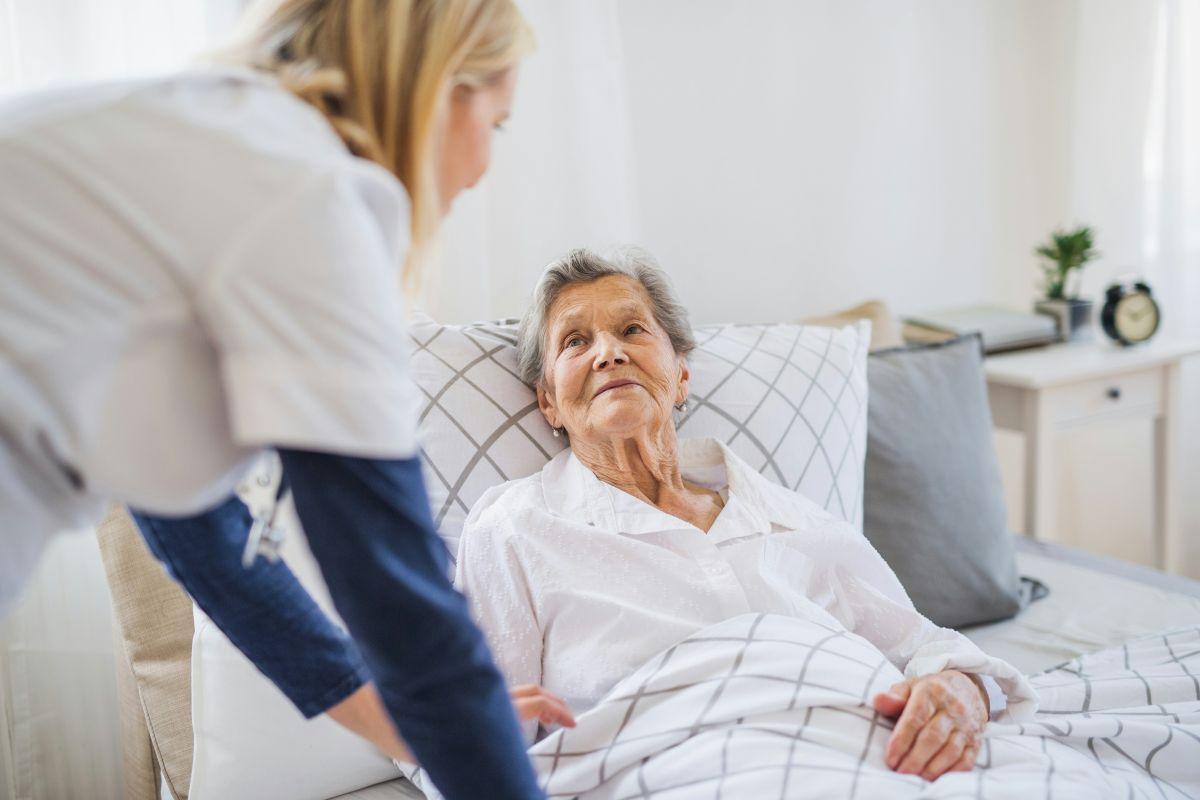
Photo: Getty Images on Unsplash+. Licensed under the Unsplash+ License.
Supervision without a ward
Without a ward around them, your nurse needs a clear point of contact. Name one registered nurse or practice instructor (Praxisanleiter) as their go-to person, plan some joint visits at the start and set fixed times to talk through cases and documentation.
Joint visits are also good exam practice. The practical exam assesses how your nurse plans, carries out and reflects on care, and that’s exactly what a colleague can watch and discuss on a shared visit.
Language: patients, families and the phone
Home care asks a lot of your nurse’s German. They talk to patients in their own homes, explain things to relatives and call doctors and pharmacies. Phone calls and regional dialects can be the hardest part, even for nurses with a B2 certificate.
For the licence, your nurse usually needs German at B2 level or higher (Make it in Germany). In home care, keep supporting their language beyond that, for example by letting them lead calls with a colleague listening in.
A starter checklist for small services
- Read the authority’s decision together and agree on a route
- Name one go-to person for supervision and plan joint visits
- Ask early where the practical exam will take place
- Plan the four-week placement if your state requires one
- Put study time into the rota as fixed time
- Apply for any funding before the course starts
How CareSteps helps
The CareSteps education centre is an AZAV-approved provider and prepares internationally trained nurses for the knowledge exam. We know that small teams can’t spare people easily, so we plan the preparation around your rota.
Funding from the Agentur für Arbeit may be possible. Our post on funding the knowledge exam explains how.
Next steps
Running a home-care service with nurses in recognition? Email us and we’ll help you plan the exam around your routes.